
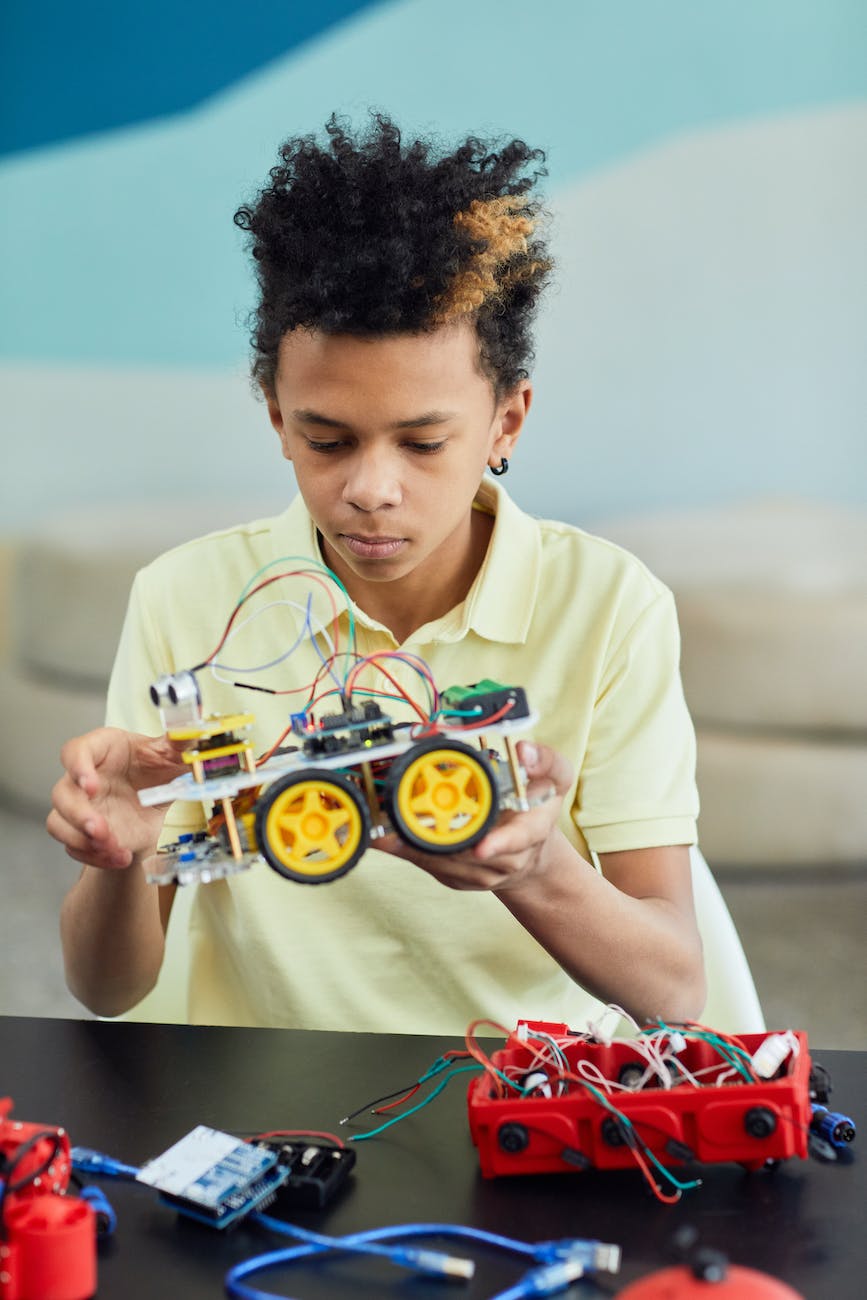
Project-based learning can be seen as the possible integration of multiple content areas designed to engage learners in real-world, authentically designed learning experiences. This instructional approach is learner centered and can create cognitively rigorous opportunities for students in various capacities.
“Many current instructional models suggest that the most effective learning products or environments are those that are problem-centered and involve the student in four distinct phases of learning: (a) activation of prior experience, (b) demonstration of skills, (c) application of skills, and (d) integration of these skills into real-world activities” (Merrill, 2012, p44). What Merrill states in the previous sentence, highlights one of the key areas of concern many in the educational community are utilize to push back against the success and deep learning that can be experienced through problem- and project-based experiences. If you are reading this, it’s more than likely that you are a proponent of incorporating PBL into your classroom, so you may be wondering of what it is I refer to here.
John Hattie, one of the leading educational minds of our day, has compiled a compendium of meta-analyses into his seminal book, Visible Learning. In this text, he has listed the effect size, or impact, specific practices have on student achievement and growth. The effect sizes range from -0.2 (Reverse Effects) all the way to 1.6 (Zone of Desired Effects). In these studies, Hattie concludes that PBL has an incredibly low effect size of .15, indicating that the impact PBL has on student achievement would occur naturally through learner development (p211). So, how does this all relate back to Merrill’s statement?
While working with teachers to build their capacity in project-based learning today, this conversation came up. I threw the effect size in their face and immediately watched them question why, I, someone who was literally preaching to them about the benefits of PBL would say something so glaringly contrary to my message would do something like this? The answer: the activation of prior experience or prior knowledge. What goes wrong in many PBL heavy environments is that the design of these environments fails to take into account not every learner is coming to the table with the same experiences or background knowledge on a given topic, therefore application of this knowledge is sometimes impossible.
Below, Merrill goes on to list, what he calls The First Principles of Instruction. In this list, Principles 1, 2, 4, and 5 can all be directly tied back to the premise of what makes strong project-based learning (p44-45).
- Learning is promoted when learners are
engaged in solving real-world problems. - Learning is promoted when existing knowledge is activated as a foundation for new knowledge.
- Learning is promoted when new knowledge
is demonstrated to the learner. - Learning is promoted when new knowledge
is applied by the learner. - Learning is promoted when new knowledge
is integrated into the learner’s world.
Looking at Principle 2 however makes one wonder, what happens where there is no prior or existing knowledge that can be activated. In these situations, it will then be left to the instructional designer, the instructor, the teacher, the facilitator, to create opportunities to front-load this knowledge, leading to a more successful application throughout the learning episode.
References:
Hattie, J. (2008). Visible Learning: A Synthesis of Over 800 Meta-Analyses Relating to Achievement. SAGE Publications.
Merrill, M. D. (2012). First Principles of Instruction. Wiley.





Leave a Reply